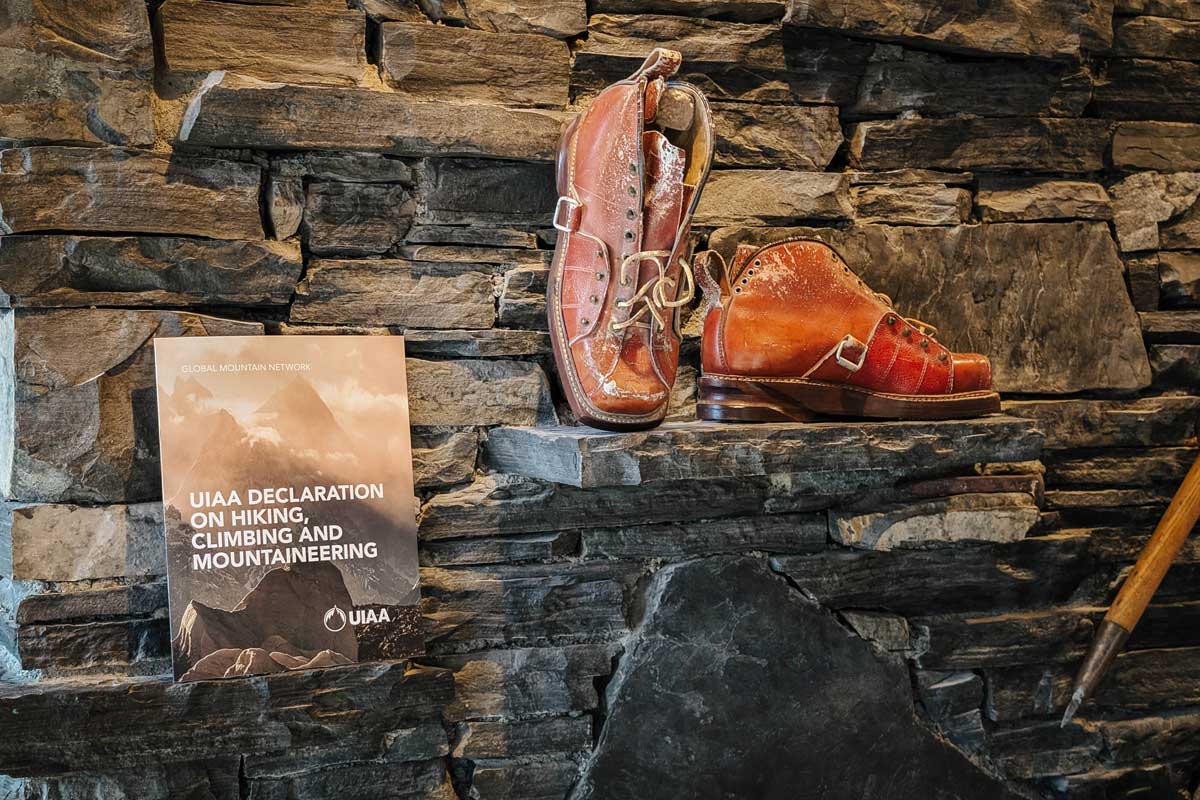
The UIAA – International Climbing and Mountaineering Federation – is delighted to announce the publication of its new declaration on hiking, climbing and mountaineering.
The declaration was officially approved at the 2024 UIAA General Assembly in Malta and has been conceived to exist in a number of different formats:
(Download) A poster format identifying the declaration’s nine basic norms
(Coming soon) A digital format on the UIAA website where not only is the entire document available to view but its individual chapters will feature live case studies where the UIAA identifies best practices in support of the declaration’s messages.
The UIAA Mountaineering Commission was tasked by the UIAA Executive Committee to draft this new Declaration as the previous version (Tyrol Declaration 2002) required updating. The Mountaineering Commission was supported in the development and delivery of this new Declaration by a number of other UIAA commissions as well as the UIAA Executive Committee and Management Board.
Greg Moseley, UIAA Mountaineering Commission President: “It is hoped that the new Declaration will provide the basis for a number of initiatives planned for the future, notably providing a platform for views and opinions on matters mountaineering and climbing. In this way, the Declaration will be a living document reflecting the views of mountaineers around the world.”
The purpose of the new declaration is twofold:
To lay out the generally accepted norms for behaviour that the UIAA considers optimal. This includes the ethics and style with which we climb and the environmental and social considerations that we should be aware of.
To clarify the best practice for climbers and mountaineers from a mountaineering viewpoint. This particularly refers to the style of rock climbs and ascents of “alpine” peaks.
As the declaration introduction identifies: “These are a set of recommendations and norms, rather than rules that will hopefully resonate with climbers and mountaineers worldwide.”
These norms are the following:
We report the style by which we climb with honesty.
We accept other people’s styles when different from our own.
We will not harm the experience of others while hiking or climbing.
We consider the effect on others before taking risks.
We help others in need, even at the expense of our own goals.
We respect the natural ecosystems in climbing areas and mountain regions.
We recognise climate change and seek to reduce our impact.
We adhere to local regulations and respect local communities and cultures.
We support the right of access to the wilderness with responsibility.
Background Information
The 2002 Tyrol Declaration was an excellent document that has served the UIAA and the mountaineering and climbing community very well over the last 23 years and many of the maxims included in that document are still very pertinent and applicable today.
But the world has changed quite dramatically over the intervening period and climbing and mountaineering have changed with it. The developments include the rise of sport and indoor competition climbing, the rapid development of the commercial outfitters guiding clients up major peaks in the greater ranges and the influence of the internet, apps and social media that have revolutionized the availability of information and changed trends. The influence of these developments is being felt worldwide.
One of the biggest developments is climate change. Sustainability guides us all at the UIAA. This is not only about protecting mountain ecosystems but supporting the well-being of local communities and those who depend on climbing and mountaineering for their livelihood.
It is about maximizing the positive environmental, social, and economic impacts associated with climbing and mountaineering, to ensure that our sport can thrive and continue to be enjoyed by current and future generations.
Mountaineering practices vary around the world from country to country and culture to culture. None of these variations are right or wrong and are usually simply differences in emphasis.
Climbing and mountaineering can generate positive impacts, supporting peace building, health and well-being, promoting cross-cultural awareness and understanding, fostering pride in cultural traditions and supporting heritage building. It can also help avoid depopulation and urban relocation by creating local jobs and livelihood opportunities, and increase visitor awareness and appreciation of natural, cultural, and historical values and assets in mountains.
It is hoped that this Declaration will contribute to the foundation that binds mountaineers together across the world.
As detailed above, the UIAA will regularly promote stories, initiatives and projects which align with the principles and messages of the declaration. UIAA member associations are encouraged to share the declaration and to support translations of the document.
UIAA Medical Commission recommends established methods for acclimatization:
Statement on xenon and high-altitude mountaineering
The UIAA Medical Commission has recently received multiple reports and correspondence from mountaineers asking whether inhaling xenon has a positive effect on the body’s response to adapt to the lower oxygen availability at altitude (acclimatization).
The UIAA Medical Commission is asked these sorts of questions due to their role in providing the mountaineering community with scientifically based information in the form of fact-based safety and health recommendations which are free of charge, evaluated by specialists, and commonly published in scientific journals. The Medical Commission is open to and interested in new methods and developments used by the climbing community and carefully evaluates their worth.
According to current literature, there is no evidence that breathing in xenon improves performance in the mountains, and inappropriate use can be dangerous. Although a single inhalation of xenon can measurably increase the release of erythropoietin, this increase is not sustained over four weeks use, nor is it associated with any changes in red blood cells. According to the literature, the effects on performance are unclear and probably non-existent.
Acclimatization to altitude is a complex process that affects the various organs/systems such as the brain, lungs, heart, kidneys and blood to different degrees, and is not fully understood. Since the physiological changes take days to weeks to influence the organism, from a physiological point of view, a single, one-off drug cannot be the key to improved acclimatization or increased performance. For erythropoietin in particular, the target of xenon, the effects take weeks to increase red blood cells, so use just before climbing would not be expected to make any difference in hemoglobin, hematocrit or performance.
Moreover, xenon has been on the World Anti-Doping Agency (WADA) Prohibited List of banned substances since 2014. A ban on the use of performance-enhancing substances can only be applied to sports that are subject to WADA rules, thus applying for example to competitive ice climbing but not to high-altitude mountaineering. Xenon is an anesthetic gas, and thus a medicine, with corresponding adverse effects and health risks, meaning in an unmonitored setting this could be impaired brain function, respiratory compromise, and even death. One study showed significant sedation in people using it at doses recommended for mountaineering. Even slight sedation is detrimental in the potentially dangerous setting of high-altitude mountaineering.
Xenon is rarely used in medicine and is not approved in all countries. Its use should be reserved for the operating room and procedural sedation by specialists with appropriate training in anesthesia. From a medical point of view, off-label use without a scientific basis and with unknown health risks must be rejected.
On the other hand, the well-known and established methods of pre- and acclimatization are safe and recommended. Discover more here.
—
This statement from the UIAA Medical Commission is supported by the UIAA Mountaineering Commission who recently spearheaded the publication of the new UIAA Declaration on Hiking, Climbing and Mountaineering. One of the objectives of this new declaration is to lay out the generally accepted norms for behaviour that the UIAA considers optimal. This includes the ethics and style with which we climb and the environmental and social considerations that we should be aware of. The Declaration will be published in full on Thursday, 23 January.
References and sources:
Effect of acute and chronic xenon inhalation on erythropoietin, hematological parameters, and athletic performance Katrin A. Dias et al. J Appl Physiol 127: 1503–1510, 2019.
Safety, hemodynamic effects, and detection of acute xenon inhalation: rationale for banning xenon from sport Justin S Lawley et al J Appl Physiol (1985). 2019 Dec 1;127(6):1511-1518. doi: 10.1152/japplphysiol.00290.2019. https://pubmed.ncbi.nlm.nih.gov/31414955/
World Anti-Doping Agency. The World Anti-Doping Code International Standard Prohibited List January 2018 (Online). https://www.wada- ama.org/sites/default/files/prohibited_list_2018_en.pdf [14 July 2018].
Effect of xenon and argon inhalation on erythropoiesis and steroidogenesis: A systematic review
Eduard Bezuglov et al.
Heliyon 2023 Apr 27;9(5):e15837.
Drug Use and Misuse in the Mountains: A UIAA MedCom Consensus Guide for Medical Professionals Enrico Donegani et al. High Alt Med Biol 2016 Sep;17(3):157-184.
In the State of the Cryosphere 2024 – Lost Ice, Global Damage report, over 50 leading cryosphere scientists warn of vastly higher impacts and costs to the global economy given accelerating losses in the world’s snow and ice regions. The report was released in November 2024 at the 29th Conference of the Parties (COP29), hosted in Baku, Azerbaijan.
Current climate commitments, leading the world to well over 2°C of warming, would bring disastrous and irreversible consequences for billions of people from global ice loss. Based on the most recent cryosphere science updates from 2024, the authors underscore that the costs of loss and damage will be even more extreme, with many regions experiencing sea-level rise or water resource loss well beyond adaptation limits in this century if our current level of emissions continues – leading towards a rise of 3°C or more. Mitigation will also become more costly due to feedbacks from thawing permafrost emissions and loss of sea ice.
A specific chapter of the report is dedicated to Mountain Glaciers and Snow. One of its lead scientific reviewers is former UIAA Mountain Protection Commission President Carolina Adler (2016-2024). Dr Adler is an Environmental Scientist and Geographer with an international career spanning over 25 years in both research and practice in the public and private sectors. Among her many roles, she is also a Lead Author for the Intergovernmental Panel on Climate Change (IPCC), specifically in the chapter on High Mountain Areas of the Special Report on the Ocean and Cryosphere in a Changing Climate (SROCC), adopted in September 2019, as well as the Working Group II contribution on Impacts, Vulnerability, and Adaptation and Co-Lead for the Cross-Chapter Paper on Mountains, adopted by the Panel in February 2022.
The chapter identifies the critical role of glaciers and snowpack on water resources and the impacts of climate change on their availability. Glaciers provide essential water for drinking, irrigation and hydropower, particularly in high mountain areas. Rapid glacial melting has led to a ‘peak’ in water availability, followed by declines as many glaciers continue to shrink. This, in turn, has created instability, threatening water supplies, ecosystems, and economies, particularly in vulnerable regions.
As the research charts, worst-case high-emission scenarios could lead to near-total losses of glaciers outside polar regions by 2100, exacerbating risks like flooding, droughts, and irreversible ecosystem disruption. The authors call for immediate emission reductions and adaptation efforts to preserve the remaining glaciers and snowpack. As detailed in the takeaways below, achieving the Paris Agreement’s 1.5°C target is critical to mitigate losses and maintain vital ecosystem services.
The chapter presents the following key takeaways:
Current Nationally Determined Contributions (NDCs) (2.3°C by 2100): Even 2°C will lead to escalating loss and damage throughout this entire century, well beyond limits of adaptation for many mountain and downstream communities. Nearly all tropical and mid-latitude glaciers would cross thresholds causing their eventual complete loss, with critically important High Mountain Asian glaciers losing around 50% of their ice. Catastrophic hazard events seen already today, such as glacial lake outburst floods and landslides, will increase in frequency and scale. Risks are especially high in Asia, where outburst floods can wash away infrastructure and cities within hours with little warning. Severe and potentially permanent changes to the water cycle, due to loss of snowpack and ice run-off during the warm summer growing season, will impact food, energy and water security.
1.5°C Consistent Pathways: This level of mitigation is the only chance to preserve at least some minimum glacier ice (15–35%) in some mid-latitude regions, including Scandinavia, the Alps, and Iceland; and maintaining up to 50% of current ice in the Caucasus, New Zealand and much of the Andes. Losses in High Mountain Asia will be far less at this temperature level, with two-thirds preserved glacier ice. Nearby communities must nevertheless prepare for significant adaptation efforts in coming decades, including continued catastrophic floods, especially with extreme rain-on-snow events. However, for most communities, these changes will not move beyond adaptation limits, and rates of glacier melt would slow by mid-century, and stabilize by 2100. Snowpack would also stabilize, though at higher altitudes than today. Some glaciers might even begin to show signs of very slow re-growth in the 2200s, as one of the first possible visible signs of planetary restoration in net-zero pathways.
Current rise in CO₂ levels continues (3–3.5°C by 2100): Catastrophic and cascading impacts from glacier and snow loss are associated with such levels of rapid warming, with some vulnerable mountain and downstream communities experiencing non-survivable conditions already by mid-century due to loss of seasonal water availability, or destructive floods from which they are unable to recover. Over time, even many of the largest glaciers in High Mountain Asia and Alaska are unlikely to survive. Snowpack will become unreliable, with rain falling at higher elevations and more frequently throughout the year when snow would otherwise be expected. Currently fertile agricultural regions such as the Tarim and Colorado River basins may no longer be able to support significant agricultural activities. Losses in mountain biodiversity stemming from cryosphere warming will be extreme across many high-elevation ecosystems.
Furthermore the document presents the following updates specific to the picture of glaciers across the world in 2024:
2024 Updates
Glacial melt globally set a record loss in 2023, according to the World Glacier Monitoring Service (WGMS).Reported observations thus far from 2024 indicated record losses in some regions, with Sweden showing the highest melt levels in 80 years of observations. Currently, 2024 is also on a record loss trajectory in Asia. Extremely low snowfall combined with extremely high summer temperatures seem to have contributed to high 2024 loss in these regions.
Venezuela joined Slovenia as the second country in the world to lose its final glacier: the Humboldt Glacier ice field became too small to flow under its own pressure in spring 2024, thus becoming stagnant at approximately 0.01 km.
Glaciers in the Andean tropics are now smaller than at any time in 11,700+ years. In 2024, they became the first global glacier region confirmed to be smaller than at any previous time since the end of the last Ice Age.
2024 data from 5,500 glaciers across the Andes show the mountains have lost 25% of their ice coverage since the Little Ice Age, and that their tropical glaciers are melting ten times faster than the cumulative global average.
The melt rate of the Juneau Ice Field quintupled between 2010–2020 compared with the 1980s, potentially locking in continued ice loss and centuries of consequential sea level rise.
Ten million people are currently at risk of catastrophic flooding hazard events from glacial lake outburst floods, especially in Alaska, High Mountain Asia, and Iceland. In Asia alone, the frequency of these events is expected to triple by century’s end without substantial emission reductions.
Under a high emissions scenario, two-thirds of Mount Everest’s famous East Rongbuk Glacier is projected to be lost by 2100. In addition to being an iconic part of the Asian water tower, East Rongbuk has climbing and cultural significance.
New observations from glacial meltwater in Svalbard, Greenland, Iceland, and Alaska show high levels of methane, in part from permafrost. This confirms that mountain glaciers are a methane source and underscores the importance of including permafrost thaw in NDCs.
Northern hemisphere winter 2023–2024 saw record low snowfall in the Hindu Kush Himalaya, highlighting concerns for runoff-fed rivers and water security.
Locked-in melt has committed the loss of at least one-third of glacier mass in the European Alps glaciers by 2050 without further warming. With the current warming trajectory, two-thirds of the glacier mass may be lost by 2050. In western Austria, near-complete glacial loss is projected if the lower 1.5°C Paris limit is not achieved.
Recent findings on ice retreat in the Eastern Himalaya show climate change directly links to glacier instability that drives cascading hazards.
A paper from July 2024 finds fluctuations in Peruvian Andes meltwater that are directly linked with changes in global biodiversity. This suggests mountainous aquatic biodiversity will be affected globally as glaciers retreat.
Download the full State of the Cryosphere Report 2024
This article forms the part of a series produced by the UIAA for International Mountain Day 2024.
As in recent years, a highlight at the 2024 UIAA General Assembly were the various panel sessions to celebrate and discuss ongoing projects under the umbrella of the UIAA.
Spread across three days, speakers both from within the UIAA and representing UIAA member federations took the stage to address the General Assembly and underlined important topics and work in progress across the vast fields of activities that climbing and mountaineering entail.
PechaKucha Presentations
Delegates were able to enjoy an entertaining evening in a PechaKucha format, where the following speakers covered a number of topics, using 20 seconds for 20 visual slides:
The session began with a video of the inaugural International Mountain Sports Training Course held in Bariloche, Argentina earlier in the year. Martin Lascano, UIAA Executive Committee member and representative of the Argentinian Federation of Ski and Andinism (FASA), highlighted how unique the experience was in bringing together not just the expertise of UIAA Commissions and local participants but also having Argentinian rescue teams sit together and exchange on best practices and challenges. The official film from the event is available to view here:
Mary Sanseverino, Vice-President of the UIAA Mountain Protection Commission, representing the Alpine Club of Canada, showed some of her eye-opening repeat glacier photography. Her excellent story-telling skills invited UIAA members to celebrate 2025, the UN-declared International Year of Glaciers’ Preservation, and displayed how the voice of mountaineers mattered in protecting the landscapes we love and are fortunate to witness.
Juan Jesus Ibanez Martín, Vice-President of EUMA and representing the Spanish Federation of Mountain Sports and Climbing (FEDME) together with Willy Montenegro, UIAA Management Board member and continental representative for South America, shared insights into a training coursethe Spanish (FEDME) and Chilean Federations (FEACH) held together earlier in 2024. The idea of working together to develop this course was born during a previous UIAA general meeting. Their enthusiasm sparked further ideas of collaboration between two UIAA member federations.
Rob Adie, UIAA Sports Event Coordinator, introduced the 2025 ice climbing season, marking a milestone year for the sport. It promises to be the largest season since the Covid pandemic. He also highlighted the potential inclusion of ice climbing as an Olympic sport in 2030, the recent release of the documentary series On Thin Ice, and encouraged UIAA member federations to engage actively with this extraordinary discipline.
Lionel Kiener, President of the UIAA Safety Commission and representative of the Swiss Alpine Club, outlined some of the Commission’s key future developments. In recent years, the UIAA has conducted extensive research on the corrosion of rock anchors, leading to the establishment of a rigorous safety standard. The UIAA now encourages manufacturers to produce bolts that meet these stringent requirements. Recently, the UIAA also initiated a global working and exchange group that brings together bolting stakeholders from around the world to foster collaboration and innovation. Another priority for the Safety Commission is the study of textile ageing and its impact on long-term resistance. Additionally, in partnership with ENSA, the UIAA is working to make a significant portion of the Safety Commission’s resources publicly accessible through an online platform. All resources related to the UIAA’s work in rock anchors and bolting has been consolidated into a dedicated website page.
On Friday and Saturday, the regular General Assembly programme was peppered with panel sessions to change the pace from standard reporting and to give detailed insight into some truly inspiring initiatives that are currently happening in the international climbing scene.
Panel 1: UIAA Strategic Plan 2025 – 2028
The focus was specifically the UIAA’s 7 Strategic Priorities, which are:
Wider global representation
Rock climbing and hiking
Ice climbing
Safety Center of Excellence
Training and development
Climate change and sustainability guidance
Financial development
Speakers explained why we speak of strategic priorities rather than a strategic plan, how these emerged and what first implementation steps will be. Panelists further highlighted that many activities are already happening in the various fields and that the UIAA will continue building on some of its strengths. Light was further shed on relevance of the strategic priorities for national federations and lastly, what the next stepping stones would be. A more detailed report on the now accepted Strategic Plan/Priorities 2025-2028 is available here.
Panel 2: Continental Reports
Here attention turned to three cherry-picked case studies on rock climbing and hiking. For those interested in reading more news from across the various continents, a dedicated newsletter goes out quarterly and can be subscribed to from this link.
The GA panel covered the following topics:
Young Hoon Oh, UIAA Management Board member and continental representative for Asia, provided insight into a Traditional Climbing Festival held in Jeoseungbong, South Korea. He mentioned the importance of keeping trad climbing alive, even and especially in areas where sport climbing is mostly what people chose among the mountain sports. Young Hoon Oh’s conclusion: We can build on climbing communities by organising this kind of festivals that clearly indicate that sport climbing is not everything and that risk is inherent to some forms of climbing.
Josef Klenner, UIAA Management Board member and President of the European Mountaineering Association (EUMA), highlighted the concept of a new database on trails of each kind throughout the mountainous areas of Europe which is currently being established within EUMA. The work has started and proves to be a quite challenging topic for the organisation and its partner, the European Rambler Association.
Benjamin Gabriel, Executive Director at the American Alpine Club, spoke of anchors in wilderness and how land management and restrictions are becoming more and more an issue with not always easy solutions. He further commented on the trad festival in Korea, also witnessing a strong trend towards indoor climbing across the United States and the value that the American Alpine Club sees in these outdoor and grassroots events.
Panel 3: UIAA Commissions
Focus: Commission Projects and Achievements 2023 and 2024
There were two rounds of Commission panels, clustered around connective themes.
The first of the two focused on all things safety – training, mountain medicine and the work of the UIAA Safety Commission. Starting with a video highlighting the inaugural International Mountain Sports Training Course held in Bariloche, Argentina earlier in the year, Martin Lascano, UIAA Executive Committee member and representative of the Argentinian Federation of Ski and Andinism (FASA) shared details on the successful event held in collaboration between FASA, the UIAA and the International Society of Mountain Medicine (ISMM).
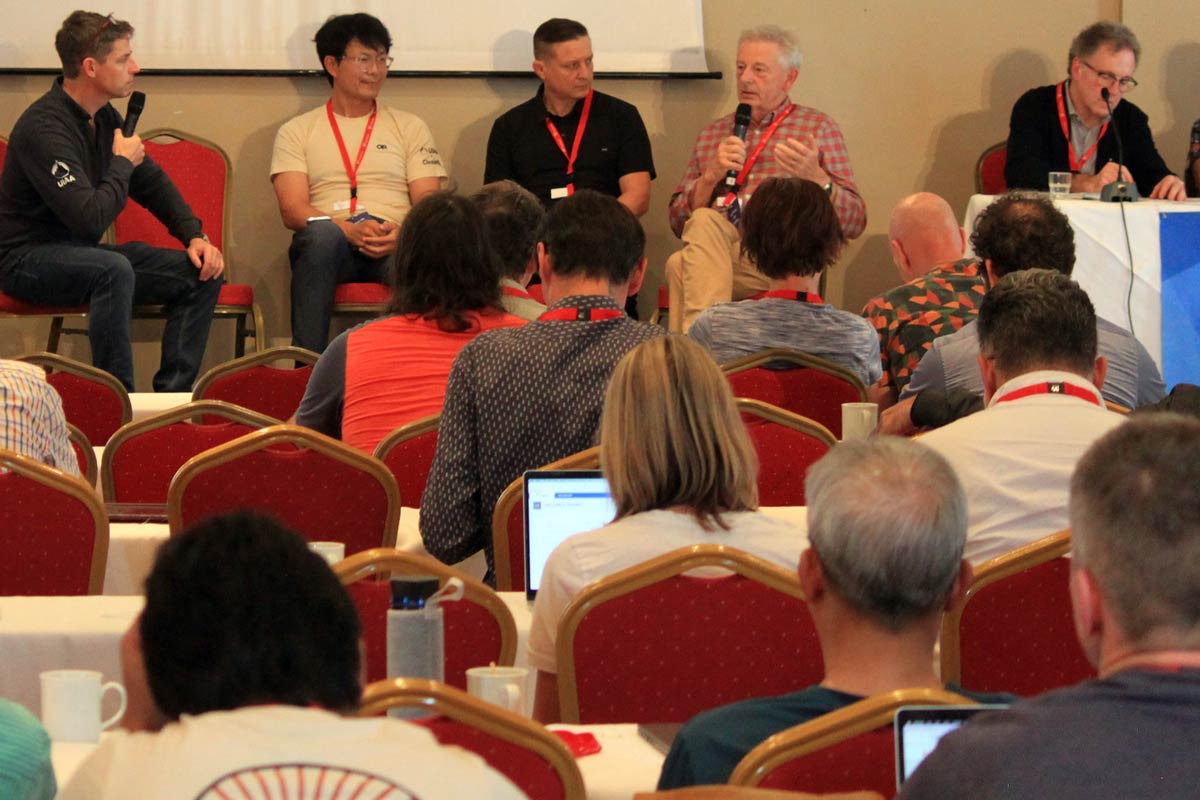
Panel discussion held as part of the 2024 UIAA General Assembly. L-R: Tarquin Cooper (moderator), Stephen Farrugia, Lionel Kiener, Martin Lascano. Photo credit: UIAA/Amelie Stettbacher
For a flavour of local initiatives and highlights, Stephen Farrugia of the Malta Climbing Club/Climb MT addressed his federation’s valuable collaboration with the UIAA Training Commission in establishing a Sport Single Pitch Instructor qualification in Malta. Part of the programme saw members of the local federation become more familiar with techniques and create an official module under the umbrella of their organisation.
Lastly, and connecting to the work of the Safety Commission, Stephen Farrugia spoke of aspects of bolting materials and related issues, particularly in the context of materials used in marine environments which are relevant in Malta.
Aerial view of the training course held in Malta as part of the 2024 UIAA General Assembly. Photo credit: UIAA/Simon Alden
Lionel Kiener, President of the UIAA Safety Commission, shed some light on the Commission’s plans to improve climbers’ safety, the newly established bolting/re-bolting/no bolting working group, involving bolting stakeholders from all around the world, and sustainability considerations that the Commission is exploring to possibly extend the shelf-life of textile products (more data is needed to make any recommendations at this point).
The second round of Commission panels focused on mountaineering and mountain protection, during which some key outputs where presented and engaged on. Notably the recently published UIAA Sustainability Charter and the UIAA’s two climate action plans – an internal one and one for UIAA member federations. The latter served as a key resource for this year’s Climate Change Summit and was workshopped together with delegates at the General Assembly. Paul Kwakkenbos and Mary Sanseverino, President and Vice President of the UIAA Mountain Protection Commission respectively, spoke of the Charter’s highlights and noted on further engagement opportunities to come in 2025.
Panel discussion held as part of the 2024 UIAA General Assembly. L-R, Greg Moseley, Victor Saunders. Photo credit: UIAA/Peter Bourne
Another key motion approved by the General Assembly was the new UIAA Declaration on Style and Ethics for Climbers, Mountaineers and Hikers. The official title of the document is to be confirmed. It will be released shortly. Greg Moseley and Victor Saunders, President and Vice President of the UIAA Mountaineering Commission respectively, shared some personal examples of how such a declaration comes to life, in that its principles can actually guide our climbs and endevours wherever one decides to engage in mountain activities.
Mary Sanseverino ended the panel in raising awareness about 2025 being declared the International Year of Glaciers’ Preservation by the United Nations and listed a number of engagement opportunities the UIAA has planned to celebrate glaciers throughout next year. More information on how to get involved will be shared by the UIAA on International Mountain Day 11 December.
Envirolapse Opportunity
After the final panel session, and in light of International Year of Glaciers’ Preservation, an exciting partnership opportunity – exclusively for member federations – was presented by Envirolapse. From glaciers to mountain peaks, Envirolapse specialises in remote access monitoring systems that provide critical data for safety, operations, conservation, and climate resilience. UIAA member federations are invited to submit their expression of interest of using a remote access camera, with details on location, and intended use. To do so, please scan the QR code at the end of the video below or click this link and fill out the form by 31 January, 2025.
All project submissions will be reviewed by Envirolapse and the UIAA to pinpoint the application that best aligns with goals and values.
If a suitable project is identified in a location that is logistically easily accessible for Envirolapse, the team will provide an Envirolapse camera for a 12-month period at no cost to any parties. For more ambitious or remote projects with a strong alignment to our shared goals, Envirolapse is open to exploring collaborative funding options to address logistical challenges, ensuring we maximise our impact.
This gesture will support UIAA member federations and offer valuable visual data to the selected federation’s project. For more information about this opportunity, please contact mountainprotection@theuiaa.org
A number of UIAA member federations and rescue organisations have established systems to collect data about accidents. Their approaches vary, from gathering of individuals stories for publication, through data collection by online reporting forms to general statistics compiled by the rescue services. Some efforts are community-driven, some organised by climbing federations, and some by public services. Altogether a substantial amount of data is being collected and often put to good use for the benefit of climbing safety, but until now there has been no uniform approach. The UIAA, led by a dedicated working group, has brought together data and knowledge from the national systems that exist, and created an international database.
Version 1 of the database is now online providing information on 18 systems from 15 countries. For each reporting system, information detailed in the database includes scope of the platform, its purpose, a summary from the UIAA about the areas of climbing and mountaineering represented as well as links to reporting results. The database will be subject to frequent updates.
“This is something of a soft launch but after over a year of research, analysis and collaboration with owners of the reporting systems we are delighted that the database is now a live tool,” explains Working Group Chair Stein Tronstad (Norwegian Climbing Federation, UIAA Management Board). “Consolidating information on the international reporting systems known to the UIAA is great progress – and part of the federation’s commitment to establishing a Safety Centre of Excellence. However, it is only the first step in the ambitions of the working group.”
These next steps include:
Having collected reporting forms from 12 accident reporting systems, an analysis with respect to types of data collected, reporting protocols, and data usage is now being conducted.
Developing a UIAA position paper on accident reporting to argue the need for accident data and address certain concerns regarding liabilities, responsibilities and ethics.
Work in progress on a comparative analysis of data from USA, Japan, and Norway with respect to factors such as spatial and temporal distribution of accidents, sex and age of the victims, types of accident, and injuries sustained.
Furthermore, the UIAA will publish a series of articles highlighting case studies from the database. This will include a deeper dive into research and stories already provided by bodies such as the Petzl Foundation (Understanding Mountain Sports Accidents) and the American Alpine Club’s highly informative Prescription («Your monthly dose of accidents in North American Climbing»).
Anyone wishing to provide information about a system not currently listed on the UIAA database can do so by contacting the Accidents Working Group.
The following report is courtesy of the Alpine Association of Slovenia (PZS), a member of the UIAA since 1991.
This is the latest in a series of articles promoting the participation of women in mountaineering to coincide with the UIAA recently signing the Brighton Plus Helsinki Declaration.
—
Slovenian alpinists Anja Petek, Patricija Verdev, Ana Baumgartner, and Urša Kešar, members of the 2024 Lalung Women’s Expedition, opened four new routes in the remote mountains above the Lalung Valley in the Indian Himalayas. The longest and most complex new line of their expedition is the 2000-meter route Here comes the sun (ED, M6+, AI5+, 5 climbing days), which follows the eastern ridge of the previously unclimbed six-thousand-meter peak Lalung I (6,243m). Here is their story:
Before the expedition, online search results indicated that our objective, the Lalung Valley, was still mostly unexplored. Our sense of its remoteness became even clearer at the Indian Mountaineering Foundation (IMF) in Delhi, where we were the ones telling the staff about the existence of certain peaks in the Lalung Valley. The reality of what this meant for us as climbers became more tangible with each passing day we spent in the valley.
We set off on August 26 together with eighteen local porters from the Pensi La Pass, the entrance to the valley, and quickly realized that even they could not provide much information. Initially, they had told us that our base camp would be at 5,000 meters, but we soon realized that was just a quick answer without any real merit. After just three hours of walking, we found an excellent spot for base camp with clean, running water at 4100 meters. Of course we went to check for other locations higher up, but we found only dirty water and unsuitable terrain.
Patricija Verdev on Lalung I. Photo: Anja Petek
Having the base camp at this location meant we’d have to add an extra day or two to the approaches to Lalung I and the neighboring peaks.
Once our base was set up, our chef Lobzang, his assistant Thuksaj, their “boss” and resident entertainer Lobzang, and officer Freni stayed with us. We developed a very friendly bond with Freni during our stay. But little did we know that our base camp was also home to bears.
The day after our arrival we explored the valley with our officer. Despite unstable weather, we managed to cover 20km of moraine and glacial terrain, which took us an entire day. Cloudy weather prevented us from getting a good look at the faces of the mountains at the far end of the valley, which were our primary objective.
After a day of rest, we continued with our acclimatization, making the most of the patchy good weather. Each team slept at an altitude of least 5,000 meters. Before we moved up to the advanced base camp (ABC) at 4,800 meters, we had our first night-time bear visit, as it sniffed around for food. After the unpleasant encounter, all four of us relocated to ABC, which was bear-free. After arriving at ABC, Lalung I made its first brief appearance, looking truly majestic and boosting the motivation of the Patricija & Anja team even further. The valley is surrounded by other peaks, some of which are still untouched and unnamed (6,274m, 6,048m, 6,197m, 6,067m). Along with Lalung I, there are also Lalung II and III, and the previously climbed Chiling I and II to the far right. We had a close look at the 6,197m peak, which Ana & Urša had been studying on photos from the 2022 expedition, but this year, the conditions weren’t very good as it had only a light dusting of snow.
Due to Urša’s altitude problems, she and Ana retreated back to base camp after two days, where they had to deal with a full-on bear saga with the cooks and officer. After more than ten unwelcome night-time visits, Patricija’s ripped tent, heaps of stolen food, and a knocked-down toilet, they managed to scare off the bears with fire and enjoyed a few peaceful nights. Meanwhile, despite no weather forecasts, Urša and Ana managed to climb two new routes on a nearby granite north face. The climbs weren’t without their challenges; on the first route, promising weather gave way to snowfall, forcing them onto an alternate exit, which eventually turned out to be quite satisfying. On their second route, they followed the planned line to the top of the face and the weather was more favorable.
After reaching ABC, Patricija and I packed our rucksacks for a multi-day adventure and after a full-day approach over a challenging glacier, we finally reached the base of the eastern ridge of Lalung I.
The forecast called for a promising weather window but on the second day on the ridge, we were forced to set up our tent in the middle of the day and huddle inside due to a snow storm, which lasted the entire third day. On the fourth day, we woke up to a sunny morning and climbed all day and late into the night, still not reaching the summit. The fifth day on the ridge required even more determination and willpower. At 1:30 am, we climbed the final mixed pitches and settled in for a rest. In a moment of tired carelessness, the wind blew away our tent poles, but by then we’d grown accustomed to bivying on the wall so sleeping in a bivy sack didn’t upset us too much. The next morning was foggy with diffuse light, making it hard to navigate the unfamiliar terrain leading to the summit of Lalung I. We finally reached the top at 9 am after climbing some easier snow slopes.
We still had the long descent down the western ridge and onto the glacier ahead of us. We descended the snowy ridge and made five rappels down the north face to reach the glacier at 6:30 pm. It took us another eight hours to arrive back at ABC. The next day, we descended to base camp and just before stepping off the moraine, the sight of three silhouettes -Ana, Urša, and Freni – brought smiles to our tired faces. Without knowing about each other’s whereabouts, we met at the perfect spot and were overwhelmed with joy.
After returning to base camp, the bear situation had calmed down, but we all agreed it was best for the animals and for us to leave as soon as possible. Our expedition ended with our departure from base camp on September 17, when we made our way to the village of Tungri. From there, it was a nerve-wracking drive on a half-finished road to Leh, where we spent the last days of the trip resting and relaxing.
Climbers: Ana Baumgartner (AO PD Ljubljana Matica) Urša Kešar (AO PD Kranj) Patricija Verdev (AO PD Celje Matica) Anja Petek (Zgornjesavinjski AK Rinka)
New routes:
31 August: 5,332m peak; Connection; VI-/V-IV, 1,400m, 15 hrs. (Patricija Verdev and Anja Petek)
10 September: 5,332m peak; BC (Bear camp); V-/IV-III, 800m, 8 hrs. (Ana Baumgartner and Urša Kešar)
13 September: 5,332m peak; Calm before the storm?; V+/IV, 670m, 6 hrs. (Ana Baumgartner and Urša Kešar)
9-14 September: Lalung I (6,243m), Here comes the sun; ED, M6+, AI5+; 2,000m (5 climbing days). (Patricija Verdev (A0) and Anja Petek)
In 2024 the Croatian Mountaineering Association (CMA) is celebrating the 150th anniversary of organised mountaineering in Croatia.
The origins of organised mountaineering in Croatia were conceived in 1874, when the Croatian Mountain Club (Hrvatsko planinsko društvo) was founded in Zagreb. The Croatian Mountain Club has from its beginning had the character of a national mountaineering association, and as such has been developing mountaineering in all parts of Croatia. In the beginning, the mountaineering association was mainly composed of naturalists and other researchers, many of whom were also the founders of the Croatian Academy of Sciences and Arts, the University of Zagreb, and initiators of many scientific, cultural and social events. In 1898 the journal the Croatian mountaineer (Hrvatski planinar) was first published, thus being one of the oldest journals in Croatia as well as one of the oldest mountaineering journals in the world still in print.
The CMA has a rich heritage. It was founded in 1874 and celebrates its 150th anniversary in 2024
Croatian climbers have climbed the biggest and hardest rock faces in the world. They have made dozens of demanding expeditions to the world’s highest mountains, from the first Croatian expedition which climbed the new route on Ingosfjeld on Greenland in 1971 to the summit of the world’s highest mountain, Mount Everest, in 1979. They were the first to climb some of the hardest rock faces in the Himalayas, they have made numerous expedition ascents to peaks over 8000m, and even skied down some of them, while members of the Croatian female expedition raised the Croatian flag on top of Mount Everest in 2009. Croatian speleologists have descended into the deepest pits in Croatia and the world and brought to light numerous findings, many of which have scientific relevance. In 1950 the Croatian Mountaineering Association founded the Croatian Mountain Rescue Service, which developed strongly and became a recognisable public rescue service in all non-urban areas where special rescue knowledge, skills and equipment are required.
Renowned alpinist Branko Šeparović made a ski descent from the summit of Cho Oyu in 1995
Today the Croatian Mountaineering Association (CMA) unites 292 mountaineering clubs, 10 regional mountaineering associations, 12 mountain guide stations, Croatian mountain rescue service and their 25 stations. The Croatian Mountaineering Association is one of the largest sport associations in Croatia and the largest non-governmental organisation committed to nature protection. Croatian mountaineers actively maintain more than 6,000 kilometres of marked hiking trails, 114 mountain huts and 47 shelters in Croatia. Of special interest to the mountaineering community is a number of mountaineering trails, the most popular being the Croatian Mountain Trail (Hrvatska planinarska obilaznica), connecting the most attractive peaks in all Croatian mountains with 158 checkpoints and six levels of acknowledgment. According to the CMA programs, more than a hundred mountaineering schools of different kinds are held every year. Mountaineering trips, tours and hikes in mountaineering clubs are led by voluntary mountain leaders and guides who were trained at the CMA according to UIAA standards. The CMA is also very active in publishing various textbooks, manuals, guidebooks, notebooks and other publications.
Croatian female expedition to Everest in 2009
With the celebration of the 150th anniversary of organised mountaineering in Croatia in 2024, the Croatian Mountaineering Association presents the rich tradition and numerous achievements of Croatian mountaineering to the whole mountaineering community as well as the general public. In January and February a climbing expedition to Patagonia was organised. In May 2024 the CMA hosted the General Assembly of the European Union of Mountaineering Associations (EUMA) in the Paklenica National Park on Velebit Mountain. Mountaineering clubs which are members of the CMA take part in the celebration by organising and participating in a series of 150 interesting mountaineering trips to Croatian mountains called “150 hiking trips for 150 years of organised mountaineering in Croatia”. To further mark the anniversary, the Croatian Mountaineering Association opened a new hiking trail on Croatia’s highest mountain, Dinara (1831 m), and on October 15, 2024, celebrated exactly 150 years since the founding of the Croatian Mountaineering Club in Zagreb. On that day, Croatian Post issued a postage stamp dedicated to the 150th anniversary of mountaineering in Croatia.
The UIAA is delighted to share the story of this historic and illustrious mountaineering association. At the upcoming UIAA General Assembly in Malta, a special presentation will be held to mark this milestone. Furthermore, it will be the 32nd year for the current President of the association, Darko Berljak, representing the CMA at the UIAA General Assembly. He has been a representative of the CMA since the UIAA GA in 1992 (Matsumoto) right through until 2024.
Images courtesy of CMA
Article supplied by CMA President Darko Berljak and CMA General Secretary Alan Čaplar
[vc_row width=”custom” width_custom=”1000px” height=”auto”][vc_column][vc_column_text el_class=”different-text”]The UIAA held its latest online member federation update at the end of September. These twice-yearly events provide a forum for the UIAA to present updates on the services it is delivering to members and in this particular case offered an opportunity to address the main talking points and agenda items at November’s annual UIAA General Assembly (GA) in Malta. Below is a summary of the key takeaways.
Shortly before the meeting, the UIAA announced the appointment of André von Rotz as its new Chief Executive Officer (CEO). Von Rotz will succeed Nils Glatthard and assume the position on a full-time basis from 1 February 2025. Further details can be found here.[/vc_column_text][/vc_column][/vc_row][vc_row width=”custom” width_custom=”1400px” columns=”2″][vc_column width=”1/2″][us_image image=”93101″ size=”full”][us_separator size=”small”][vc_column_text css=”%7B%22default%22%3A%7B%22color%22%3A%22%23999999%22%2C%22font-size%22%3A%220.8rem%22%2C%22line-height%22%3A%221%22%7D%7D”]
UIAA Executive Committee member Simon Alden outlined the progress made in drafting the new UIAA Strategic Plan, to be voted on at the upcoming GA. It will cover the four-year cycle 2025 to 2028. Development plans will be created around the following defined strategic areas of priority:
Wider global representation:
Further develop global UIAA membership by providing leadership and tangible benefits
Implement development programmes for future members
Grow beyond 100 members for the UIAA’s centenary in 2032, in particular in areas of the world where the UIAA is currently underrepresented
Rock climbing and hiking
Greater representation for rock climbers and hikers who constitute a significant segment of the membership base
More resources aimed at identifying and addressing the needs of hikers and climbers
Support for both bolting and climbing festivals
Ice climbing
Support and develop ice climbing as a sustainable, global sport
Further development of the UIAA Ice Climbing World Tour
Pathway to Winter Olympic Games participation
Launch of new operating unit (see below)
Safety Centre of Excellence
A commissions “joint venture” involving Safety, Training, Legal Affairs and Medical Commissions
Build on UIAA’s expertise, experience and reputation
Promote continual development and improvement of gear, technical, medical safety standards and accident prevention
Promote the UIAA as the recognised global leader in all aspects of climbing safety
Training and Development
Build on UIAA’s training standards and certificates, knowledge and experience
Strengthen Training Commission organisation and structure to create a solid foundations for growth
Promote its standard programmes more widely and develop training structures to suit the needs of individual federations in various stages of maturity
The UIAA presented a number of proposals for changes to its Articles of Association. These include the creation of an operating unit ‘World Ice Climbing’ for ice climbing – and for the UIAA and the GA to be able to create operating units in general; a new membership fee ‘staircase’ model – designed to streamline administration and address disparities among members based on economic factors and to better incorporate members’ own membership; changes to the process for granting honorary membership; and an increase in the number of UIAA Court members. These will be presented, and voted on, at the GA.[/vc_column_text][/vc_column][/vc_row][vc_row height=”small”][vc_column][vc_column_text]
Sustainability Charter & Climate Action Plans
The UIAA Mountain Protection Commission presented information on the UIAA Sustainability Charter (a long-awaited update of the 2002 UIAA Environmental Guidelines), penned for release this month. This will be both as a short-form synopsis and long-form document. The latter, fruit of a number of years of research and development, is designed to guide the UIAA and its members in federation addressing climate change and promoting social responsibility. It will also act as a live document with its messages regularly tied to real world case studies and aligned to the UIAA’s own work.
While the Sustainability Charter’s principal target are climbing and mountaineering organisations it provides principles and guidance for the UIAA’s internal climate action plan and the climate action plan for member federations. This latter is based on four pillars – commit, mitigate, adapt, advocate. Extensive information on both the Sustainability Charter and climate action plans will be released over the coming weeks and months.
During the meeting, MPC member Mary Sanseverino also presented the UIAA’s involvement in the UN International Year of Glaciers’ Preservation for 2025. This includes celebrating the inaugural World Glacier Day on 21 March. A dedicated communication plan, to be supported by the work and insights of UIAA member associations, is being put in place. Further information on the UIAA’s role will be presented ahead of 11 December’s International Mountain Day.[/vc_column_text][/vc_column][/vc_row][vc_row height=”small”][vc_column][vc_column_text]
Declaration on Climbing & Mountaineering
As per the Sustainability Charter, the UIAA has worked diligently on another new declaration, spearheaded by the Mountaineering Commission in collaboration with the Mountain Protection Commission, and dedicated more broadly to the ethics/style, balancing risks & failure and rights and responsibilities. This will also be a living document, with the UIAA providing guidance, context and case studies for each of its governing nine points. Pending approval at the GA, the document will be released shortly after.[/vc_column_text][/vc_column][/vc_row][vc_row height=”small”][vc_column][vc_column_text]
UIAA Publications
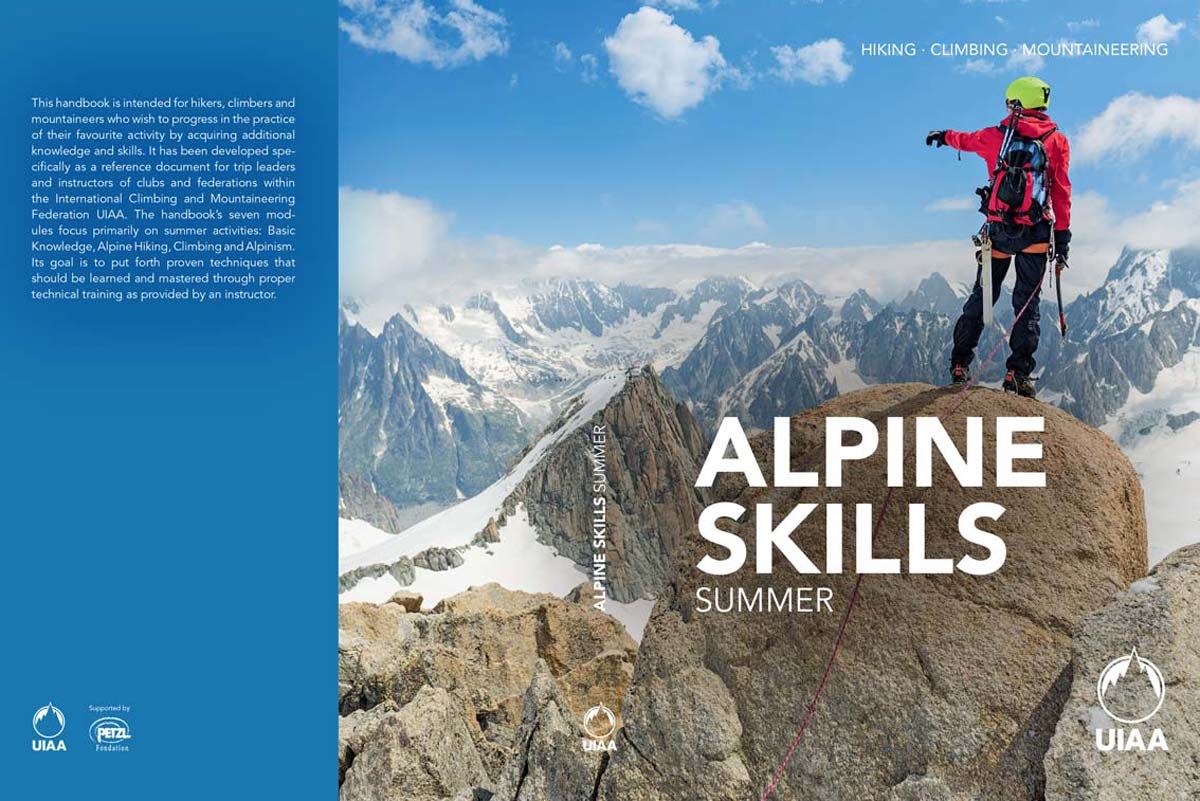
The UIAA has made impressive progress in the delivery of a number of new publications. This includes a revision to the English language version of the Alpine Handbook, in partnership with Petzl Foundation. In addition to updates throughout the document, it features new chapters on orientation and meteorology. Members have received an invite to order print copies. The availability of a paid, downloadable digital version of the same document is being discussed.
In collaboration with the International Canyoning Federation and the Petzl Foundation, a dedicated handbook for Canyoning has been produced and will be available in English, French and Spanish
An update article on the progress of these publications will be published ahead of the GA. The UIAA has also worked closely with the German Alpine Club (DAV) on a translation of the DAV Bolting Guide into English. This will be freely available from the UIAA website in due course.[/vc_column_text][/vc_column][/vc_row][vc_row height=”small”][vc_column][vc_column_text]
General Assembly in Malta
The UIAA addressed the main information related to elections at the General Assembly in Malta to take place from 8-9 November. This includes the open seats in the Executive Committee and Management Board. The deadline for applications is 11 October. Supporting documents will be made available on 25 October. The current agenda and programme can be found on the UIAA website.
Please follow updates on the UIAA website, through UIAA newsletters and on social media regarding all of the points addressed in this article. A full review of the GA will be available on 11 November.[/vc_column_text][/vc_column][/vc_row]
In September 2024 the UIAA – International Climbing and Mountaineering Federation – became a signatory of the Brighton Plus Helsinki Declaration, an “international treaty that has become a road map to support the ongoing development of a more fair and equitable system of sport and physical activity, fully inclusive of women and girls”, developed by the International Working Group (IWG) on Women and Sport.
“I am excited and privileged to sign the Brighton plus Helsinki 2014 Declaration on Women and Sport on behalf of the UIAA. It is an honour that I take seriously and solemnly on behalf of our organisation. It is encouraging that increasing numbers of women are active members of our climbing communities. Many women are pushing the boundaries of climbing, and many more participate for the fun and physical challenges. However, it is clear that both at a participation level and at an institutional level, there is unfortunately still significant work to do. I applaud the International Working Group on Women and Sport for its work and this initiative. I look forward to working together towards a mountaineering and climbing culture that enables and values women’s full involvement in every aspect of our wonderful sport.”
– UIAA President Peter Muir (main photo)
“We are very happy to welcome the UIAA as Brighton plus Helsinki Declaration signatories, and they will be an asset to the network. I am sure other Federations will be interested in how their commissions have worked with external advisors to not only create much needed research and plug knowledge gaps, but also ensure the findings are accessible and understandable to all. They have some exciting ambitions for gender equality, and we are looking forward to supporting them and sharing their stories.” – IWG Secretary General Lisa O’Keefe MBE
In signing the declaration, the UIAA has joined the world’s largest network of individuals and organisations seeking to advance gender equality in sport and physical activity. Acknowledging the many women practising climbing and mountaineering worldwide, the UIAA wishes to encourage safe and pleasant mountain endeavours for all through pertinent information and advice, such as its new medical FAQ section.
Françoise Jaquet, the first woman to preside the Swiss Alpine Club (2013-2021), current member of the UIAA Executive Committee and co-UIAA signatory of the declaration, explained that “global organisations such as the UIAA must lead the way towards gender equality in sport and society in general, and thus fully respect their “globality””.
As a signatory of the Brighton Plus Helsinki Declaration, the UIAA aims to:
promote women’s participation in climbing and mountaineering
strengthen communication around equity and equality in society and sport
highlight its significant resources for women going to altitude
push for gender equality in ice climbing
help integrate gender equality policies for UIAA leadership
benefit from existing network of signatories of the Brighton Declaration
The Declaration follows ten principles. The UIAA has been particularly proactive in principle 7 “Education, Training and Development” and principle 8 “Sport, Information & Research”, with the Medical Commission having focused on the topic of women going to altitude ever since first publications in 2008.
Furthermore, UIAA member federations, such as the British Mountaineering Council (BMC), have been providing extensive information and support for female climbers through platforms such as OutdoorHer. All climbers are encouraged to make use of the information and spread the word about these useful resources.
Recently the UIAA was an active voice on the topic of women at altitude at the World Congress on Mountain & Wilderness Medicine held in Snowbird, Utah (USA). Please refer to the following article. An episode of the UIAA podcast Mountain Voices also addressed the subject of women at altitude. Furthermore in 2022, the UIAA hosted its own mountain medicine workshop for women. Information, and a video recording of the presentations made, can be found here.
Similarly, and in an effort to make newly published scientific information on women going to altitude accessible to the climbing and mountaineering community the UIAA Medical Commission recently adapted and simplified the scientific language and published it in the form of highly informative but easy-to-read Frequently-Asked-Questions (FAQs).
Examples of UIAA’s gender equality work will be shared on IWG’s Insight Hub, which houses a vast collection of research, case studies and toolkits designed to empower and advance gender equality in sport, in due course.
Please also refer to IWG Women & Sport press release with versions in French and in Spanish.
From the reality of climbing Everest in 2024 to the allure of competition ice climbing; from avalanche rescue to adapting to climate change; from a passion for rock climbing to high altitude advice for women; the first series of the UIAA – International Climbing and Mountaineering Federation – podcast Mountain Voices has covered a range of important topics.
Contributions have come from 16 guests including a number of leading climbers as well as experts in the field of mountain safety, medicine and sustainability. All six episodes are now available.
Episode #1 – Inside the UIAA Ice Climbing World Tour
Featuring: World Tour ice climbers Gordon McArthur (Canada), Eimir McSwiggan (Ireland) and UIAA sport events manager Rob Adie (UK)
Episode 1 of Mountain Voices transports you to the thrilling setting of the UIAA Ice Climbing World Tour. The annual series pits athletes against challenging, technical routes and sends them up vertical walls of ice at lightning speeds. The venues are scenic but temperatures challenging. What exactly is the World Tour?, what is its appeal?, and will it one day feature in the Olympic Winter Games?
Episode #2 – The Sounds Nobody Wants to Hear / Avalanches
Featuring: IFMGA Guides Marc Beverly (USA) and Zeb Blais (USA)
Episode 2 of Mountain Voices focuses on the subject of avalanches and is inspired by the UIAA Safety Commission’s recent work related to electromagnetic interference in avalanche transceivers. The guests discuss what causes an avalanche, the impact of climate change on avalanches and how our everyday electronic devices from phones to head cameras to GPS watches may interfere with transceivers.
Episode #3 – Everest: It’s Complicated
Featuring: journalist/author Ed Douglas (UK), climber/anthropologist Young Hoon Oh (South Korea) and climber and mountain guide Victor Saunders (UK)
A spotlight on the world’s highest, most iconic and debated mountain. 2024 marks the 100th anniversary of Mallory and Irvine’s fated last attempt to climb Everest. They’ve come to define that heroic post first world war period of exploration in their experimental oxygen sets and (by our standards) primitive clothing. What would define the present age? The age of commercialisation? A trophy achievement for rich individuals with limited climbing experience, blindly sliding up a rope fixed by teams of Sherpas? Is climbing Everest actually an achievement? And what is the current situation for the sherpas who support every climb?
Inspiration comes from the work of the UIAA Medical Commission who have played a leading role in the publication of a number of papers dedicated to women and mountaineering. Topics covered across the papers include altitude sickness, frostbite, nutrition and papers on female-specific issues like menopause. The episode tackles the following questions: Are women more or less prone to cold and altitude related illnesses than men? Do women need to follow different advice? and do women make safer mountaineers?
Episode #5 – Let there be rock / Rock Climbing
Featuring: Climbers Adam Ondra (Czechia) and Beth Rodden (USA)
In exclusive interviews, two legends from the world of rock climbing – Adam Ondra and Beth Rodden – share their passion for the sport, their favourite places to climb and what keeps them motivated. Ondra also discussed his plans for 2024, including an Olympic campaign in Paris, while Rodden discusses the release of her autobiography, A Light through the Cracks.
Episode #6 – Climate Change and Climbing
Featuring: François Masse, Superintendent/Lake Louise, Parks (Canada), climber and Piolet d’Or recipient Graham Zimmerman (New Zealand/USA), Pedro Lacaz Amaral, CEO & Founder of the Gear Tips Recycling Program (Brazil)
A focus on climate change and specifically three fascinating case studies; including the loss of a historic hut in Canada, an award-winning sustainability programme in Brazil and the perspective from a professional climber of how, in the face of climate change, we can adapt to spending time in the mountains.
Mountain Voices is presented by Tarquin Cooper, co-produced by Peter Bourne and edited by Tom Tushaw. Season 2 is scheduled for November-December 2024.
Mountain Voices is also available on most major podcast platforms including Apple Podcasts and Spotify.
For further details please visit the Mountain Voices website page.
Manage Cookie Consent
To provide the best experiences, we use technologies like cookies to store and/or access device information. Consenting to these technologies will allow us to process data such as browsing behavior or unique IDs on this site. Not consenting or withdrawing consent, may adversely affect certain features and functions.
Functional
Always active
The technical storage or access is strictly necessary for the legitimate purpose of enabling the use of a specific service explicitly requested by the subscriber or user, or for the sole purpose of carrying out the transmission of a communication over an electronic communications network.
Preferences
The technical storage or access is necessary for the legitimate purpose of storing preferences that are not requested by the subscriber or user.
Statistics
The technical storage or access that is used exclusively for statistical purposes.The technical storage or access that is used exclusively for anonymous statistical purposes. Without a subpoena, voluntary compliance on the part of your Internet Service Provider, or additional records from a third party, information stored or retrieved for this purpose alone cannot usually be used to identify you.
Marketing
The technical storage or access is required to create user profiles to send advertising, or to track the user on a website or across several websites for similar marketing purposes.