Author: Communication

Introducing UIAA Safety Standard 110 for Static Ropes

The publication of the UIAA Standard 110 for Static Ropes heralds the latest achievement of the UIAA Safety Commission. It was approved at the Commission’s 50-year anniversary meeting in Chamonix in April following five years of intense efforts from a dedicated working group, composed of delegates from various climbing, mountaineering and rescue federations, technical experts, rope manufacturers and testing laboratories.

Standard 110 will be joined shortly by Standard 171 for Via Ferrata Construction as well as updates to five existing Standards as outlined here. The delivery of these updates has been achieved in parallel with the impressive and ongoing work in the field of rock anchors and bolting for which a dedicated library of assets for climbers, bolters and gear manufacturers is available.

 “The process to establish a new Standard was complex and very thorough, for example it took us several meetings to come to an agreement first on the scope, which is the root of the Standard and then eases the discussions about technical requirements and test methods.”
Lionel Kiener (SAC, Switzerland), UIAA Safety Commission President

“Static ropes have evolved as rope technology has advanced. And the way we use these ropes has evolved. This revolutionary standard has no minimum diameter, a first for global rope standards. It focuses on performance and ensures minimum requirements focused around supporting human life – anyone using ropes only certified to an accessory cord standard is missing out on real important guarantees that come with this Standard.”
Stephen Gladieux (USA, American Alpine Club), UIAA Safety Commission Working Group Lead for UIAA Standard 110

Photo credit: Marc Beverly
The Technical Perspective

Standard 110 is distinguished from the other UIAA and EN standards related to climbing and mountaineering ropes. While the requirements for dynamic ropes have been well defined since 1961 in the international standard UIAA 101 (and later in the EN 892), the situation is more complex for low elongation ropes. As shown in a table in the explanatory information guide, UIAA 107 (Low Stretch Ropes) is valid for low-stretch kernmantle ropes with an elongation up to 5%. In UIAA 107, the minimal diameter is set to 8.5mm (and the maximal to 16mm).

Nevertheless, for several years, ropes smaller than 8.5mm diameter have been on the market for crevasse rescue, rappelling and haul maneuvers. These ropes are currently certified according to UIAA 102 (Accessory Cord) and EN 564, but these standards are meant for accessory cords. For example, they have no specification on static strength with terminations, nor fall arrest test and the minimal tensile strength is low for thin ropes. This situation was not fully satisfactory, the UIAA decided to homogenise the requirements with the release of a new Standard.

Further Information

View Standard 110 Static Ropes
View Standard 110 Explanatory and Technical Information

President’s Report: Greater concentration, greater focus and progress of the seven strategic priorities

[vc_row width=”custom” width_custom=”1000px” height=”auto”][vc_column][vc_column_text el_class=”different-text”]In his address (*) for the 2025 UIAA General Assembly, 24-25 October, UIAA President Peter Muir provides an overview of the federation’s progress over the past 12 months with a close focus on the performance of the seven strategic priorities approved in 2024 for the next four years.

[/vc_column_text][us_separator size=”small”][vc_column_text]

The Address

I hope that at this year’s General Assembly, delegates pick up on both my optimism and my reflections on the positive direction that the UIAA is heading. We are more concentrated and more focused, thanks significantly to our new strategic priorities.

One of my personal highlights from this year was attending the 50th anniversary of the UIAA Safety Commission, held in Chamonix in April. I was last in Chamonix in 1979 when backpacking. And one thing had not changed, the weather was atrocious and I never saw Mont Blanc. Does it really exist? Or is a tourist attraction fabricated by the French, Swiss and Italians? It remains a mythical mountain for me.

It was really nice to observe the massive turnout for the SafeCom event and listen to many complex and technical discussions. The dedication and skill that supply that particular Commission is outstanding. And it is typical of many areas of the UIAA.

My own climbing activities have been hit hard by the fires in Canada over the past year, another reminder of the impact of climate change. Most of the backcountry in Northwest Ontario, in Manitoba, and in the Canadian Shield, was closed until really the end of June. I guess this has given me more time for meetings…

I’d like to also reflect on the change of Chief Executive Officer. Andre von Rotz succeeded Nils Glatthard as CEO in January. I was worried when Nils left because he had performed a great job and was very skilled at dealing with people and many challenging situations. Andre has really hit the ground running and not only ensured continued stability but brought his own personality and different interpretation to the role.

Over the past year, I have really enjoyed both the executive committee and management board meetings. I always did, but over the past year, they have taken on a new kind of persona. Everybody is involved, everybody is interested, bringing lots of good ideas. And I attribute a lot to the fact that we’ve set strategic priorities rather than a strategic plan. People have found the path clearer.

Here are my reflections on the seven strategic priorities:

[/vc_column_text][/vc_column][/vc_row][vc_row width=”custom” width_custom=”1400px”][vc_column width=”1/2″][us_image image=”95909″ size=”full”][us_separator size=”small”][vc_column_text css=”%7B%22default%22%3A%7B%22color%22%3A%22%23999999%22%2C%22font-size%22%3A%220.8rem%22%2C%22line-height%22%3A%221%22%7D%7D”]

UIAA Ice Climbing World Cup, Cheongsong
Photo credit: Rhea Kang

[/vc_column_text][/vc_column][vc_column width=”1/2″][us_image image=”95908″ size=”full”][us_separator size=”small”][vc_column_text css=”%7B%22default%22%3A%7B%22color%22%3A%22%23999999%22%2C%22font-size%22%3A%220.8rem%22%2C%22line-height%22%3A%221%22%7D%7D”]

International Sports Training Course, Bariloche
Photo credit: Laureana Fuentes – FASA/UIAA

[/vc_column_text][/vc_column][/vc_row][vc_row disable_element=”yes”][vc_column][vc_video link=”https://www.youtube.com/live/g8YiZgbwX6g?si=IDI87_s3wPzx_c5u”][/vc_column][/vc_row][vc_row width=”custom” width_custom=”1000px” height=”auto”][vc_column][us_separator size=”small”][vc_column_text el_class=”normal-text”]

Wider Global Representation

Thanks to our Working Group, efforts continue to strengthen the UIAA’s global reach beyond its traditional Northern Hemisphere base. Significant growth has been observed in Central and South America, with progress in Asia and in Africa too.

Regional meetings and recruitment of new members are ongoing and attention given to membership fee structures to support smaller federations. The UIAA has a stated ambition of representation from 100 member countries by 2032. We are well on track, we may even hit that figure this year, but wider global representation is not only about numbers. We need to support the financial and logistical barriers that remain challenges for some regions. Overall engagement and inclusivity are improving.

And these new members, they bring in different perspectives. It strengthens them and it strengthens us. It also leads to wider representation in our various structures including boards and commissions.[/vc_column_text][us_separator size=”small”][/vc_column][/vc_row][vc_row width=”custom” width_custom=”1000px” height=”auto”][vc_column][vc_column_text el_class=”normal-text”]

Financial Development

After being in some tight spots, the situation is now very encouraging. We’ve established partnerships of various levels with Lenovo, Fixe, Namah Ropes, Altezza Travel and Mammut for the apparel you see being worn at the GA, as well as our continued relationship with the Petzl Foundation. These are steps to further developing sponsorships.

Although some deficits remain, projections indicate a balanced budget in 2026.

Efforts led by Yolanda de Both, Andre von Rotz, and the Finance and Audit team have improved fiscal management and sponsor relations. We need to continue looking at some service offerings to achieving greater financial self-sustainability.

The overall financial outlook is positive, showing steady improvement since 2024.[/vc_column_text][us_separator size=”small”][/vc_column][/vc_row][vc_row width=”custom” width_custom=”1000px” height=”auto”][vc_column][vc_column_text el_class=”normal-text”]

Safety Centre of Excellence

This is another area where the trend is positive. The Commissions – Safety, Medical and Legal Affairs, which form a natural part of the Safety Centre of Excellence are producing some great work. Likewise the Accident Reporting working group.

We’ve had two new safety standards published this year and revisions to several others; we have a testing lab in North America for the first time; we’ve seen great collaboration between the Medical and Safety Commissions for the Mountain Sports Symposium here in Peja and the Medical Commission engaged in a number of international events. I’d also like to credit the Mountaineering Commission for their support on a number of topics ensuring the UIAA has been more efficient and responsive to certain questions and tasks.

Our communication team tells me that, through podcasts, social media and other campaigns, that safety is a massive draw in terms of people coming to the UIAA for information. It is a natural entry point for climbers to enter the world of the UIAA. And a word on the Mountain Voices podcast, which has seen us bringing a range of leading climbers and mountaineers under the UIAA umbrella. I have really enjoyed sending them my messages of thanks through Canada Post.[/vc_column_text][us_separator size=”small”][/vc_column][/vc_row][vc_row width=”custom” width_custom=”1400px”][vc_column width=”1/2″][us_image image=”94681″ size=”full”][us_separator size=”small”][vc_column_text css=”%7B%22default%22%3A%7B%22color%22%3A%22%23999999%22%2C%22font-size%22%3A%220.8rem%22%2C%22line-height%22%3A%221%22%7D%7D”]

UIAA Safety Commission 50 years, Chamonix
Photo credit: Peter Bourne

[/vc_column_text][/vc_column][vc_column width=”1/2″][us_image image=”95910″ size=”full”][us_separator size=”small”][vc_column_text css=”%7B%22default%22%3A%7B%22color%22%3A%22%23999999%22%2C%22font-size%22%3A%220.8rem%22%2C%22line-height%22%3A%221%22%7D%7D”]

UIAA General Assembly 2024
Photo credit: Peter Bourne

[/vc_column_text][/vc_column][/vc_row][vc_row width=”custom” width_custom=”1000px” height=”auto”][vc_column][us_separator size=”small”][vc_column_text el_class=”normal-text”]

Climate Change and Sustainability

This is a key priority and one which was in good shape even before it was defined as one of the seven priorities. The Mountain Protection Commission and its various working groups are doing a fine job. Partnerships with Lenovo and the King Albert Memorial Foundation for the Mountain Protection Award highlight tangible progress.

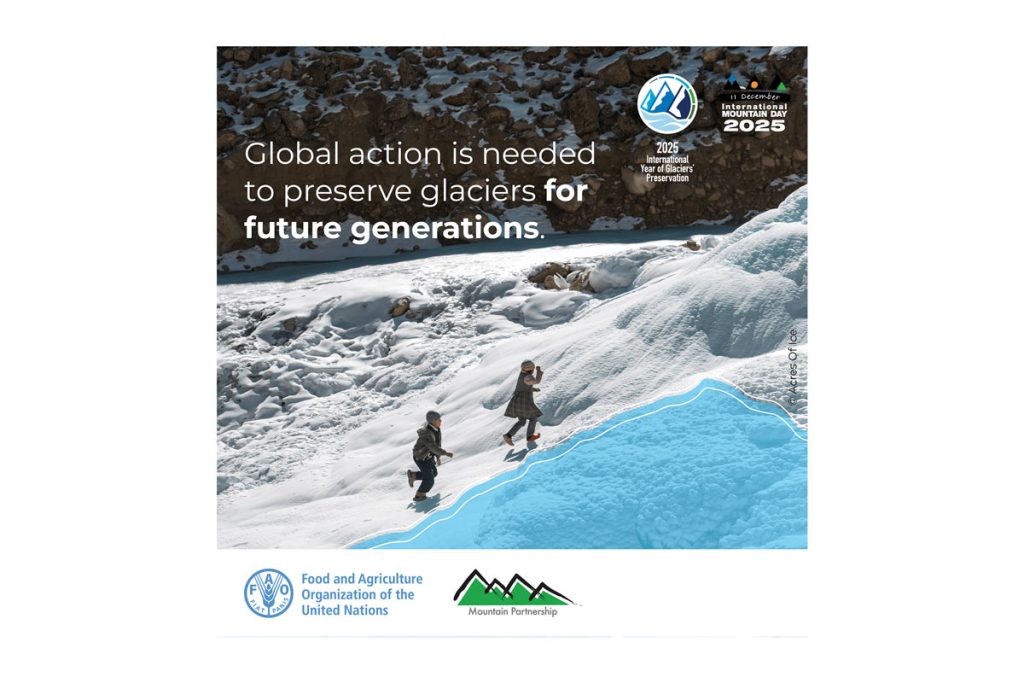
The Mountain Protection Award, and its new biennial model, remains an iconic project for us. And I’m delighted that we’ll recognise the winner this weekend. We committed significant resources to marking the International Year of Glacier Preservation and the inaugural World Glacier Day.

Here at the GA, we’ll host another Climate Change Summit, where the UIAA will continue to work with member federations, large and small, in their own climate action plans and journeys. There is a maturity to what we are doing including with the Carbon Footprint Reporting, where we run the full report biennially allowing more time to conduct analysis.

In my mind, in-person occasions like this remain crucial. Online meetings are not as effective. However, online meetings allow us to remain in closer contact, to meet more regularly, to make quicker progress and when we meet in-person to be more efficient and streamlined.

On a personal note, one thing I do is buy offsets against my travel. It is something I’d really encourage everyone to do.[/vc_column_text][us_separator size=”small”][/vc_column][/vc_row][vc_row width=”custom” width_custom=”1000px” height=”auto”][vc_column][vc_column_text el_class=”normal-text”]

Ice Climbing

Like finance, ice climbing was a contentious subject one year ago. It has been a remarkable turn-around. The newly-formed World Ice Climbing structure has exceeded expectations under its new governance model. It was a big mountain to climb. Led by JoAnne Carilli-Stevenson, World Ice Climbing Board Chair, and Rob Adie in the office, they have achieved a lot. It’s a testament to finding the right people, delegating responsibility and letting them run with it and do it.

One of the areas I have been impressed with is the improved collaboration with event organizers and the clarity of responsibilities which have strengthened overall operations. The World Ice Climbing structure is made up entirely of experts and a broad range of stakeholders. The sport benefits from increased stability, with athlete representatives, organizers, and staff aligned under shared goals.

In terms of the Olympic Winter Games, we are not in a position to make promises or define targets but the World Ice Climbing Board remains in close discussions with the organizers of the 2030 Games in the French Alps.

More important is continuing to deliver a great UIAA Ice Climbing World Tour and thanks to the professional management, and clear direction and delegation within World Ice Climbing, I am confident we will continue to organize great events with a significant number of member associations and athletes participating.[/vc_column_text][us_separator size=”small”][/vc_column][/vc_row][vc_row width=”custom” width_custom=”1000px” height=”auto”][vc_column][vc_column_text el_class=”normal-text”]

Training & Development

A decision was made to halt training activities in July of this year. This was to allow a review of its operational and administrative structure to ensure that future training programme development would be built on stronger foundations. The first step in this approach has been the creation of a Working Group with the remit to implement such a review.

The aim is for training activities to relaunch in 2026, but these need to be based on a more structured approach than in the past and working closely to respond to the needs of our member associations. Training has been a success in the past and will be again in the future. Our plan is to integrate it more closely into the Safety Centre of Excellence. However, we need to ensure the model is sustainable.

Likewise, on the subject of development, we have been conducting a review of our activities in youth.

We will be able to report more on training and youth in 2026. The framework for both will likely include clear criteria for third-party partnerships and standardised certification procedures.[/vc_column_text][us_separator size=”small”][/vc_column][/vc_row][vc_row width=”custom” width_custom=”1000px” height=”auto”][vc_column][vc_column_text el_class=”normal-text”]

Rock Climbing & Hiking

Until now we have largely spoken about impressive or at least incremental progress. We need to focus more on delivering on rock climbing and hiking pledges in 2026.

Our new UIAA Declaration, approved at last year’s GA, includes a clear reference to hiking. Hiking initiatives within the Mountaineering Commission are currently in development and projects should soon come to fruition, thanks also to the support of delegates from the Italian Alpine Club, CAI.

In terms of rock climbing, there is more work to be done to get it to where we want it to be. Both hiking and rock climbing have a critical mass which leads me back to my first point in terms of wider global representation.[/vc_column_text][us_separator size=”small”][/vc_column][/vc_row][vc_row width=”custom” width_custom=”1000px” height=”auto”][vc_column][vc_column_text el_class=”normal-text”]

Conclusions

One thing which is clear is how many of the seven strategic priorities rely on each other and are interlinked. In general terms, progress across these seven areas reflects a clear trajectory towards a stronger global presence, financial sustainability, and significant operational improvements.

There are areas to develop but the key thing is we know what they are. The focus is on continued collaboration and using our resources as efficiently as possible.

Thank you to the EC and MB for our enjoyable and fruitful collaboration, leadership and ensuring that the strategic priorities have remained on track. Thank you to all of the Commissions and volunteers who support the UIAA with countless hours of expertise and dedication. Thank you to the Office for your professionalism and commitment. Thank you to all member associations for supporting us and allow us to support your work. Have a great General Assembly.

(*) Please note that this speech has been provided in advance of the GA as a supporting document to allow delegates to best prepare for the information and voting sessions. There may be some minor differences from this document in the speech given by Peter Muir on Friday 24 October.[/vc_column_text][/vc_column][/vc_row]

Global reach of UIAA Declaration on Hiking, Climbing and Mountaineering

Approved nearly twelve months ago at the 2024 UIAA General Assembly in Malta and officially published shortly after, the UIAA Declaration on Hiking, Climbing and Mountaineering has delivered on its promise of being a ‘living, breathing’ and global document.

The Declaration was published with a dual aim:

  • To lay out the generally accepted norms for behaviour that the UIAA considers optimal. This includes the ethics and style with which we climb and the environmental and social considerations that we should be aware of.
  • To clarify the best practice for climbers and mountaineers from a mountaineering viewpoint. This particularly refers to the style of rock climbs and ascents of “alpine” peaks.

Examples of the Declaration’s messages being used to support topical climbing and mountaineering debates can be seen in the recent UIAA statement on the Nepali government’s initiative to making more mountains free to climb and earlier this year regarding the UIAA’s position statement on the use of xenon gas in high-altitude mountaineering.

UIAA member associations have embraced the Declaration. The Alpine Club of Canada (ACC) was the first to print the Declaration and make both the paper and its poster version available in a cross section of its clubhouses. The Corean Alpine Club (CAC) was the first federation to translate the Declaration, followed by a version in French and as of October 2025, an Arabic translation courtesy of UIAA associate member Fujairah Adventures Centre (based in the United Arab Emirates).

Translations of the poster, essentially a short-form version of the Declaration depicting its nine norms, have been produced in an incredible 33 languages. These have been courtesy of a number of UIAA member associations as well as the UIAA Office.

“We are delighted with the feedback we have had on the Declaration and the input of many member federations who have helped translate it and make it available to their membership. We encourage members to make the poster visible in their facilities and to share the document’s many important messages. We will continue to use the Declaration’s guidelines as important references points when shaping UIAA policies, positions and procedures. Our next priority is producing case studies and best practices which highlight some of the Declaration’s norms.”
Greg Moseley, UIAA Mountaineering Commission President

Visit the Declaration website page for full details
Download the Declaration, in English, here.

Statement: Nepal makes 97 mountains free to climb

The UIAA is pleased to note the recent decision to open up “new” areas and more peaks in the 6000 and 7000 metre range in western Nepal. Some 97 peaks, in the provinces of Karnali and Sudurpashchim, will be free of climbing permit charges.

Throughout recent years, and in an increased digital society, many of the more popular areas in the Nepal Himalaya have become prone to overcrowding and impacted by negative side effects such as increased pollution and lengthy and dangerous waiting times on summit attempts. The Nepalese government is to be congratulated on this initiative.

Opening up this area of western Nepal creates opportunities for true adventure climbing and exploring new routes. This initiative may also provide more employment opportunities for local communities as climbers come to visit these more “remote” regions.

Aa cited in a few media outlets, some climbers are lukewarm about this development, stating that the wavering of permit fees is somewhat inconsequential compared to tackling expensive access issues and significant infrastructure challenges. While this is undoubtedly true any initiative that attempts to relieve the pressure on the more popular areas should be encouraged.

The 2024 UIAA “Declaration on Hiking, Climbing and Mountaineering” lays out the tenets for ethical behaviour in mountain regions. This initiative which encourages visiting newly opened regions may provide recreation, both physical and spiritual, for generations of climbers in the future and is supported by a number of points made in the Declaration.

UIAA and Altezza Travel agree sustainability partnership

The International Climbing and Mountaineering Federation, the UIAA, and Altezza Travel, a leading Mt Kilimanjaro operator, are delighted to announce a two-year sustainability partnership.

The UIAA and Altezza Travel have agreed to collaborate and promote activities in the field of sustainability. This includes two of the UIAA’s most prominent projects – the biennial Mountain Protection Award and the federation’s Climate Action Plans.

Founded in 2014, Altezza Travel is a Tanzania-based tour operator with over a decade of experience in Kilimanjaro climbs and wildlife safaris, trusted for its exceptional service, safety, and local expertise. Social responsibility initiatives dedicated to the community and environment are closely tied to Altezza’s guiding services. On Kilimanjaro itself, Altezza is the largest outfitter and a Leave No Trace advocate and has started several forest restoration projects. In 2025 it became the first B Corp in the industry.

 “We are delighted to welcome Altezza Travel as a partner of our sustainability initiatives. Their support will enable us to invest more resources in the delivery of our mountain protection projects and help increase visibility of the actions and advice delivered in the seminal UIAA Sustainability Charter, published in 2024.”
Andre von Rotz, UIAA CEO

“Ten years ago, we started Altezza Travel on Kilimanjaro. Since then, we have witnessed every day how its fragile ecosystems balance between global travel and conservation. Our team has always been at the forefront of preserving Kilimanjaro’s environment for future generations, and now it is the right time to extend this commitment to the global mountaineering at large. We could think of no better partner than the UIAA to begin this journey”
Alex Altezza, Altezza Travel, Chief Executive

Safety Warning – LAPPAS Climbing

LAPPAS has received a limited number of notifications concerning “Heat-Affected Zone (HAZ)” – white signs in Rings with Welded joints. The reports of failure have been limited to few Rings from batch August 2021-December 2022. These incidents indicate unexpected failures of welded rings after being set-in place for a few months/years and under low loads.

Please refer to the warning information sheet for full details.

Contact

For further details please contact LAPPAS.

Further Information

For a full list of recalls and warnings reported to the UIAA please visit the dedicated database.

UIAA makes revisions to three Safety Standards

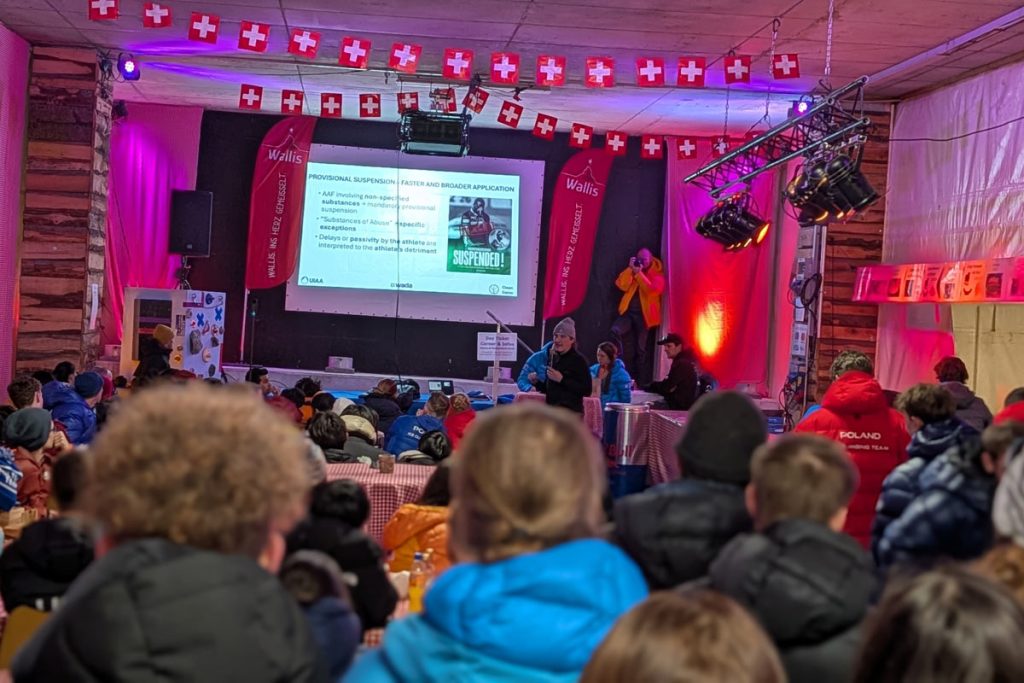
At its principal annual meeting held in Chamonix, France in April 2025, the UIAA Safety Commission (SafeCom) approved two new Safety Standards and the revision of several others.

Last month, an update to the Rock Anchor Standards was published. SafeCom has now officially updated revisions to the following Standards: 106, Helmets; 108, Energy Absorbing Systems and 130, Load Sharing Devices. They can all be downloaded from the Safety Standards library.

The new Standards: 108, Static Ropes with a very low elongation and 171, Via Ferrata Construction are expected to be release very shortly.

“We are delighted to be able to publish these revised Standards. I’d like to recognise the significant expertise, commitment and dedication of the various working groups in bringing these significant updates life,” explains SafeCom President Lionel Kiener.

Further Reading

UIAA Safety Standards

Recall for inspection – Nimbus Lock Carabiner

C.A.M.P. has received a limited number of notifications concerning the failure of the spring mechanism that activates the closure of the gate on the Nimbus Lock carabiner. The reports of failure have been limited to batch numbers 10 23 and later. The issue is easily identified if the carabiner is opened completely and does not automatically return to its closed position. The spring mechanism will break and the gate will not return to its closed position in affected units. C.A.M.P. is in the process of implementing a corrective action for future production of Nimbus Lock carabiners. Until the corrective action is in place, the company is issuing a recall for inspection for all Nimbus Lock carabiners with batch numbers after 10 23. The batch numbers included are: 10 23, 11 23, 12 23, 02 24, 03 24, 04 24, 09 24, 10 24, 12 24, 01 25, 02 25, 06 25.

Affected products with Nimbus Lock carabiners are:

  • – Nimbus Lock (ref. 2927 green), (ref. 292702 violet), (ref. 292703 blue)
  • – Nimbus Lock 3 Pack (ref. 3434)
  • – Locker Draw KS (ref. 3436) which includes a Nimbus Lock carabiner
  • – Energy CR3 Pack (ref. 2961) which includes a Nimbus Lock carabiner (harnesses and belay devices are not included in this recall)
  • – Energy Nova Pack (ref. 2962) which includes a Nimbus Lock carabiner (harnesses and belay devices are not included in this recall)

Returns & FAQs

Please read the full release from CAMP on what to do next, returns and further specifics.

Further Information

For a full list of recalls and warnings reported to the UIAA please visit the dedicated database.

Important revisions to UIAA Standard 123: Rock Anchors

A number of important announcements were made at the UIAA Safety Commission meeting held in Chamonix, France in April. This included the approval of two new Standards: UIAA 110 Static Ropes and UIAA 171 Via Ferrara Construction (further details coming soon) as well as the validation of a new UIAA testing laboratory and the first one in North America – ACT Labs. Another important milestone was the latest revision, version 5, of one of the UIAA’s most important standards – UIAA 123 Rock Anchors.

In recent years, the UIAA has dedicated significant investment, some 200,000 euros and counting, and resources to research related to rock anchors and bolts. Initially, this centred around the subject of corrosion and stress corrosion cracking failure. A significant milestone was reached when the updated UIAA Rock Anchors Standard was released in 2020. However, work in this field remains significant. While new products – certified to Standard 123 – are now available on the Market, the challenge is ensuring both bolters and climbers are aware of the issues related to corrosion and the importance of using certified products. A dedicated website page pools together resources on the subject including important information for climbers and bolters.

What is new in Version 5?
Version 5 is a major revision, introducing key safety concepts for fabrication that UIAA SafeCom project leads Fred Campos (CMBE, Brazil) and Per Forsberg (SKF, Sweden) developed with the support of a Working Group.

  • Improved design and layout– easier navigation, clickable links, and a new Scope
  • New foreword– rewritten to clearly explain the background, intent, and scope of this major revision.
  • New terms and definitions– plus improved acronyms for easier reading and reference.
  • Consolidated corrosion classes– maintained from v4, but reaffirmed as a cornerstone for safety: long-term durability cannot rely on material choice alone.
  • Stronger welding rules– quality requirements aligned with ISO 3834, ensuring welds are documented, certified, and resistant to hidden defects, with a new dedicated Annex.
  • Better material traceability– defined levels of assurance, from supplier declarations up to certified composition reports, balancing safety and cost, with a new dedicated Annex.
  • Quality Management System requirement– manufacturers must provide an Supplier’s Declaration of Conformity (SDoC) confirming an ISO 9001–compliant system, supported by a valid certificate.
  • Consistent language and structure– harmonized with other UIAA standards for clarity.
  • Improved installation guidance– updated instructions for glued-in and torque-controlled anchors.


This video, produced at the 2025 UIAA Safety Commission meeting in Chamonix, offers an overview of the work of SafeCom, the Safety Standards approved in 2025 and the Standards for which revisions have been made.

Further Resources

Download version 5 here.
Discover more about UIAA Safety Standards

Latest Legal Case Study: Tribunale di Trieste

Launched in 2024, the UIAA mountaineering and climbing accidents case law database now includes reports from 15 different cases. These are drawn from accidents which took place in 12 different countries and on five continents.

The latest case study concerns an accident which took place during an indoor climbing course in Italy.

Summary of the Facts

During an indoor climbing course organised by the amateur sports association Olympic Rock Trieste, a participant (G.M.) was seriously injured after falling approximately seven meters from a climbing wall. The accident occurred while he was participating in a supervised training session as part of an intermediate-level course designed to deepen technical climbing skills.

As part of the course structure, students were routinely assigned to secure each other during exercises—one climbing, the other belaying. In this particular session, the responsibility for securing G.M.’s ascent and descent was assigned to a fellow student (F.L.), not to an instructor. While G.M. was descending, F.L. performed an incorrect belaying maneuver that failed to control the rope properly, causing G.M. to fall to the ground. The fall resulted in physical and psychological injuries, leading G.M. to file a legal claim.

Reasoning Summary

The Court begins by assessing the legal nature of the relationship between the injured party and the sports association, Olympic Rock Trieste. Despite the association’s claim that the relationship was of an associative nature, the Court finds that it was in fact a commercial service relationship. The plaintiff paid a fee in exchange for training and participation in a climbing course, with the expectation of receiving instruction and guarantees of safety. Therefore, this was not a typical membership in a non-profit sports club, but a contract for services, giving rise to contractual liability under Article 1218 of the Civil Code.

This distinction is crucial because it excludes the application of Article 2050 c.c., which concerns liability for dangerous activities outside of contractual settings. Article 2050 is meant to provide relief when there is no contract regulating safety duties; but in this case, the duties of care and protection were part of the contractual obligations assumed by the association. Even assuming that the course was offered without a profit motive and within an amateur, non-commercial setting, this would not significantly affect the legal outcome. In such a scenario, Article 2050 of the Civil Code—concerning liability for dangerous activities—would still apply, given the inherently risky nature of climbing, as recognized in prior case law (Cass. no. 12900/2012 which recognized climbing as an activity with an own inherently risky). Nevertheless, in the present case, the existence of a contract between the parties makes it unnecessary to assess the activity’s dangerousness under Article 2050. What really matters is the failure of the association to meet its contractual duty to ensure a safe environment, especially in delegating safety roles to course participants without providing adequate supervision.

The Court then turns to the conduct of F.L., the coursemate who was assigned to ensure the climber’s safety. Although there was no contract between him and the injured party, F.L. accepted a role that involved safeguarding another participant and failed to perform it correctly. His conduct falls under the scope of Article 2043 c.c., which imposes liability for damages caused by negligent or wrongful acts. His failure to properly manage the climbing rope, as admitted during the proceedings, constituted a breach of the general duty not to cause harm (neminem laedere), especially given that he had assumed an active safety role during the exercise.

The Court further analyzes the organizational setup of the course. It highlights that the association had adopted a structure in which students took turns securing each other during climbing sessions. While this may have had some training value, it was also a way to optimize costs by reducing the number of instructors needed. This decision, while perhaps beneficial for the association, transferred significant safety responsibilities to students without formal agreements or specific benefits in return. Importantly, although the students were assessed as capable of taking part in the course, there was no evidence that they had explicitly assumed responsibility for others’ safety in a legal sense.

Based on these considerations, the Court concluded that both the association and F.L. bore responsibility: the former on contractual grounds (Article 1218), and the latter under tort (Article 2043). As for the allocation of liability, the Court found that it was objectively impossible to determine the exact contribution of each party to the accident. There was no clear evidence that would allow for an accurate or approximate apportionment of fault. In such cases, the Court applies the default rule under Article 2055, paragraph 3, of the Civil Code, which states that where doubt exists, liability is presumed to be equal. As a result, each party was ordered to pay half of the total amount awarded. The non-material damages recognized in favour of the injured party amounted to €13,556.40.

UIAA Legal Affairs Commission Summary

The case is interesting in many respects. First, the court’s reasoning confirms that, regardless of whether the relationship between the course organizer and the participant is commercial or non-commercial, it is possible to establish the organizer’s liability for an accident, with different legal bases being applied to establish such liability. Related to this is another Italian case in the database – Cass., sez. III, judgement 24 july 2012, n. 12900.

Moreover, the case is noteworthy because the court allowed the organizer’s liability to stand alongside the participant’s liability, even though the court considered that, for economic reasons, the organizer had delegated some of their duties to the course participants. The court’s conclusions are in line with the codified rules on compensation for damage in the Italian Civil Code. Similar rules can be found in other codified legal systems.

However, various codified legal systems may take different positions on whether it is possible to base liability simultaneously on contract and on tort, and to have different rules for shared liability. In a common-law legal system, the court’s conclusions could differ greatly from those of the Italian court.

Further Resources

To access the database, and read the full report, please click here.

The database also provides the opportunity for users to submit cases for inclusion.